
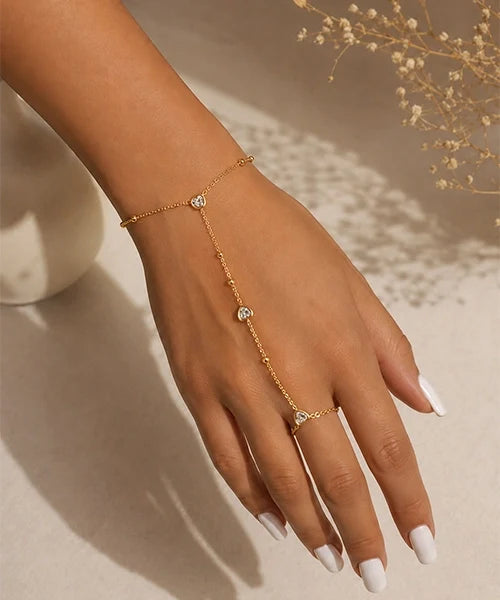

A bracelet spends less time on your wrist than it does in a drawer or a box. The other twenty it's sitting somewhere at home. And this is why where your most precious jewellery will live the most is something you need to consider. The point is to protect it while you're not wearing it too.
This doesn't mean buying expensive organisers or dedicating a shelf to jewellery care. A drawer works perfectly fine as a jewellery box if it keeps bracelets separate and dry. The problem isn't usually the storage container. It's the habits around it.
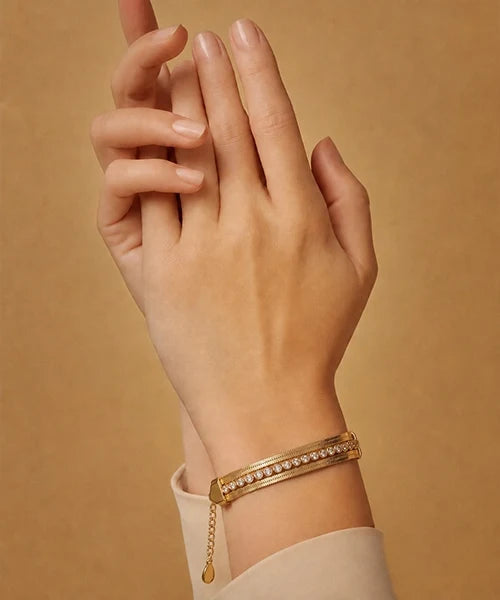
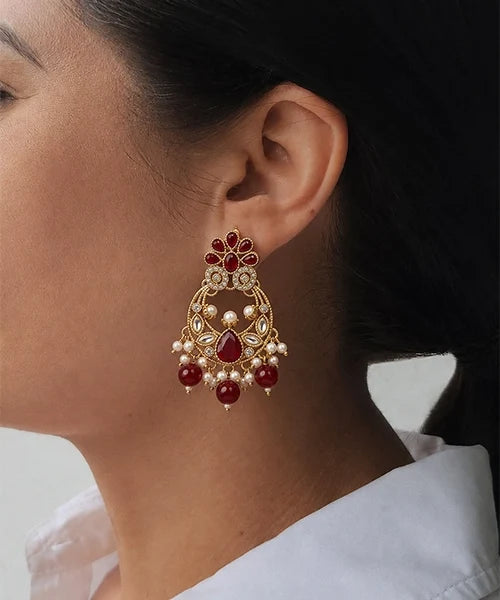
For anyone collecting traditional Pakistani jewellery like a cuff bracelet to keep for years to come, storage is a problem during the humid months. Washing your face isn't the only time bracelets come into contact with moisture. In cities like Karachi and Lahore, the humid air can also take its toll over time.
How and why do bracelets and bangles tarnish?
The first signs are easy to miss. The shine starts to dull down and the color starts to change little by little. Sometimes only one side of the bracelet has changed colors, because that's the side it was resting on in the drawer or pressed against another piece.
Wiping a bracelet with a soft cloth before putting it away takes about five seconds. If you want your cherished pieces to stay with you for years and in shining condition, adapt the habit to wipe after every wear. This way the product does not marinate on the metal until the next time it's worn.
Why does a Bracelet get scratched even when worn carefully?
When you are wearing them, they're simply on your wrist, which is smooth and mostly free of anything abrasive. The problem starts when they go back into storage with everything else like earrings or necklaces or whatever else you're keeping in the same place.
Think about a chain bracelet, for example: every time the drawer opens, it will move and can get tangled with your necklaces or malas. The charms can scratch across the polished metal when you're trying to untangle the pieces. Just like this, small marks accumulate until the bracelet looks visibly worn out.
This is most likely to happen with low-quality plated pieces, as the layer is so thin. Matte finishes hide it a little longer but aren't immune. The fix is separating pieces and keeping them like this no matter where you store them, be it a bag or a drawer.
Do You Really Need a Jewellery Box to Store Bracelets Properly?
Someone with two or three bracelets doesn't have that much advantage of having a large jewellery box with mostly empty compartments. The better way is pouches. A few soft pouches take up less space and protect each piece perfectly. Larger collections require items like organisers. You can get one of those boxes that have many compartments big enough to fit one thing in each.
If each bracelet stays separate, dry, and away from constant sunlight, the container is good enough.
|
Storage Option |
Worth Using? |
Why |
|
Soft pouch |
Yes |
Stops pieces rubbing together, takes up very little space |
|
Fabric-lined jewellery box |
Yes |
Practical for larger collections, keeps things organised |
|
Drawer with dividers |
Yes |
Works well if each bracelet has its own section |
|
Airtight pouch |
Yes |
Useful for pieces that won't be worn for a while |
|
Open tray |
Sometimes |
Fine overnight, less ideal for long-term storage |
|
Bathroom shelf |
No |
Steam and moisture build up here almost every day |
Should You Keep the Silica Gel Packet Online Jewellery Stores Provide?
When you buy online jewellery the "Do Not Eat" silica gel packets that come with it are not meant to be thrown away. They absorb any moisture that might be in the box. When storing your bracelet, you can keep the packets wherever you are keeping your jewellery, and it will keep dry. Once it stops working, replace it with a fresh one and your pieces are safe again.
The Best Daily Habit for Keeping Your Accessories in Good Condition?
Putting a bracelet away with traces of lotion on it once isn't going to ruin it. Doing it several times a week for months will. Product builds up around chain links, underneath stones, inside clasps. These are the spots that rarely get cleaned unless you sit down to deep-clean them.
A quick wipe with a soft microfibre cloth before storage is usually enough. No soaking, no household cleaners, no polishing every other day. Cleaning too aggressively can actually wear plated finishes faster.
Should Different Types of Bracelets Be Stored Differently?
Yes, cuff bracelets are less likely to tangle but they're wider and heavier. Stacked directly on polished pieces they leave surface marks. Charm bracelets create another problem because every charm becomes an additional hard edge that knocks against nearby jewellery whenever anything moves.
Keeping different styles apart takes almost no effort. It avoids problems that are harder to fix after.
|
Bracelet Style |
What to Watch For |
Better Storage Choice |
|
Chain bracelets |
Tangling, clasp marks |
Lay flat in an individual pouch |
|
Cuff bracelets |
Surface rubbing on other pieces |
Store alone or in a wide compartment |
|
Charm bracelets |
Charms hitting nearby jewellery |
Keep away from polished pieces |
|
Beaded bracelets |
Stretching if squeezed |
Store flat without heavy pieces on top |
|
Tennis bracelets |
Stones rubbing against metal |
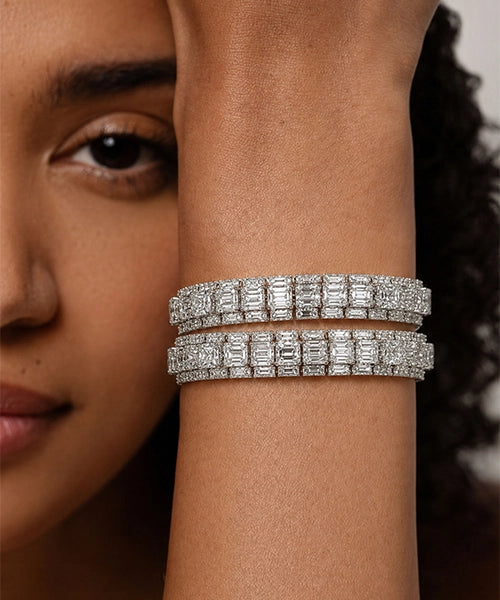
Individual compartment or soft pouch |
Common Bracelet Storage Mistakes People Don't Realise They're Making
Leaving a bracelet in the open air for weeks or using those cute but impractical jewellery stands. Keeping them uncovered lets dust get in the spaces and the air can affect the pieces.
Putting them away after washing hands without drying them first is an easy mistake. Moisture collects around clasps and between links even when the bracelet feels dry to the touch.
Not keeping pieces made of different materials separately. They can rub together and react too.
Does Climate Affect How You Should Store Bracelets in Pakistan?
In a dry climate, a style pearl bracelet left in an open tray might stay fine for weeks. In many parts of Pakistan, particularly during the pre-monsoon and monsoon months, the same habit can affect plated finishes considerably sooner. Humidity in the air does real work on artificial jewellery even without any direct contact with water.
The goal is to avoid leaving jewellery somewhere that stays warm and damp, which during Pakistani summers can include almost any room with poor ventilation.
Those small storage choices tend to have more impact than any cleaner or polishing product for anyone growing an artificial jewellery collection here.
Key Takeaways
|
Do |
Skip |
|
Wipe bracelets before putting them away |
Storing with lotion or perfume still on the surface |
|
Give each bracelet its own space |
Letting chains, cuffs, and charms rub together |
|
Store somewhere dry and away from steam |
Keeping bracelets in the bathroom |
|
Separate different bracelet styles |
Mixing heavy cuffs with delicate chains in one compartment |
|
Choose storage suited to your collection size |
Assuming an expensive jewellery box solves everything |
Frequently Asked Questions
Can bracelets tarnish even if you have never worn them?
Yes because sweat is not the only reason for them to become dull. Pieces that you have never worn but are stored in a place for a long time will darken especially if you live near the sea or there is humidity.
Is a zip-lock bag safe for storing bracelets?
It can be, provided the bracelet is completely dry before sealing. If they are even a tad bit moist because of sweat from your hands or because you just washed your hands, the condition can be even worse.
Is it okay to stack them together?
It depends, but smooth bangles generally worn together don't scratch each other as much as different layered bracelets. But if you use a hack like clasping them to one hole to keep them untangled when you're wearing them, it's perfectly fine.
Final Thoughts
Bracelets don't usually lose their finish from being worn too often. More often it's what happens between wears that makes the difference.
A bracelet stored clean, dry, and on its own will almost always hold its finish longer than one dropped into a crowded drawer, regardless of how much the storage box cost. As a collection grows, the care taken after a bracelet comes off matters just as much as what happens while it's being worn.