

Jhumkas are probably the most underused earrings in a Pakistani woman's collection. They come out for shaadis and then go back in the box until the next one. But if you look at how women in their twenties and thirties are dressing in Karachi and Lahore right now, jhumkas are showing up with plain white kurtis, with jeans, with nothing else on the neck, no dupatta, no full bridal setup. They've outgrown their occasion-only reputation and most people haven't caught up to that yet.
This guide covers what actually makes a jhumka look work, including the parts most styling content doesn't bother explaining.
Quick Facts
Jhumkas work with western outfits when everything else is kept minimal. Gold tone is the most versatile finish for most Pakistani skin tones. Half-up hair is currently the most popular casual pairing. You don't need a matching necklace for a jhumka look to feel complete. Smaller jhumkas suit daily wear, larger bells suit formal occasions.
Does the Size of a Jhumka Affect How It Looks on You?
es, that’s why there are detailed guides on which sizes and shapes of earrings suit different face shapes, especially when exploring trends in Artificial Jewellery in Pakistan. Most people tend to treat jhumka sizes as a scale of formality choosing larger ones for weddings and smaller ones for casual dawats. However, this is not the right way to choose your earrings, as the selection should be based more on face shape, outfit balance, and overall styling rather than just the type of event.
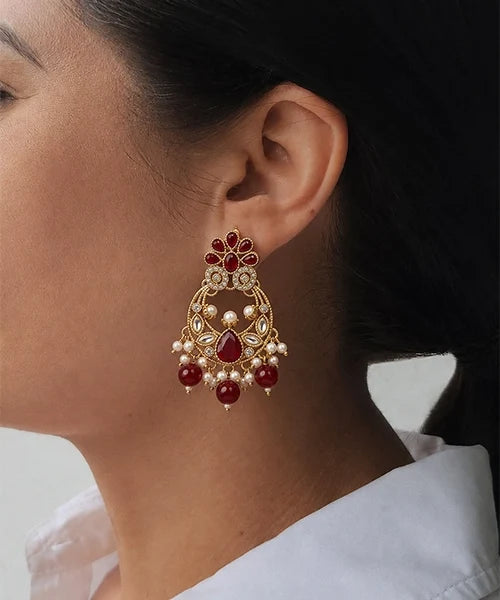
A larger bell of a jhumka with more drop details catches more light, framing the jaw from a slightly lower angle. This draws the eye down toward the neck and collarbone. On some outfits and some face shapes, like chubbier faces, this is exactly what you want. On other people with broad jawlines or already sharp jaws, it can be too much.
A smaller, closer-set jhumka creates a cleaner line. It's still obviously a jhumka, still has the swing, but the effect is quieter. For daily wear this is usually the better call. For an event where the jewellery is meant to do some of the work, going larger makes sense.
For everyday wear, there's no need to go too long. A drop of about two or three centimetres is the sweet spot and still adds enough detail to stand out.
What to Do With Your Hair
Many jhumka styling posts say "wear your hair up" and leave it at that. The explanation behind this is movement. When hair is not covering the ear, the swing of the jhumka is fully visible, and that movement is most of what makes the earring charming. A full updo or a low bun keeps the jhumka most visible and lets it shine.
The half-up style has become the most popular way to wear jhumkas casually in Pakistan right now, and it even transitions beautifully into jewellery for wedding looks. And why wouldn’t it be? It keeps the hair out of the face while ensuring the jewelry remains clearly visible. It creates a perfect balance between a full traditional style and leaving your hair completely down, making it a versatile choice for both everyday wear and more formal occasions.
If you have thick or long hair and want to wear jhumkas with it fully down, go one size up from what you'd normally pick. A small jhumka in heavy hair disappears. You need the larger bell, so it still peaks through.
Which Outfits Work and Which Create Problems
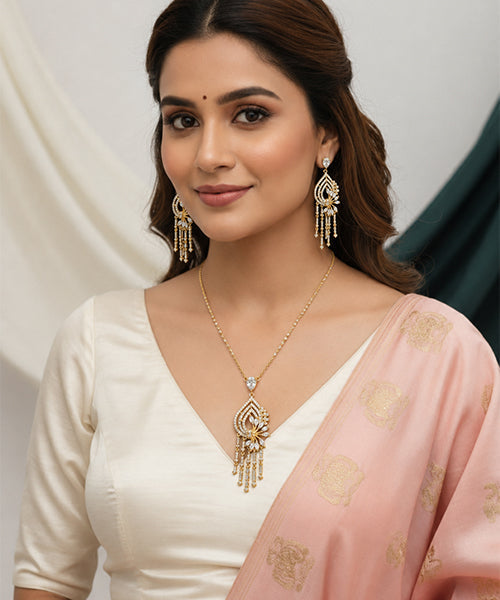
Choosing the right outfit can enhance your overall look, while the wrong combinations can create styling problems. For example, a plain cotton or linen kurta pairs best with medium-sized jhumkas and no necklace, as over-accessorising can ruin the simplicity. A western top with a round or scoop neck works well with small to medium jhumkas, but boat necks, turtlenecks, or layered necklaces should be avoided as they clash with the earrings. With formal Pakistani wear, larger jhumkas in a complementary colour create a graceful look, whereas exact colour matching or adding a competing necklace can feel overwhelming. Similarly, a monochrome outfit styled with a high ponytail looks elegant with small jhumkas as the sole statement piece, while oversized bells can overpower the entire silhouette.
Should Your Jhumka Match Your Other Jewellery?
This is where a lot of looks go wrong. Trying to match a jhumka exactly to a necklace or the rest of a set usually produces a look that is more like shop display than personal style. Jhumkas look better when they just match your outfit and do not appear like a set.
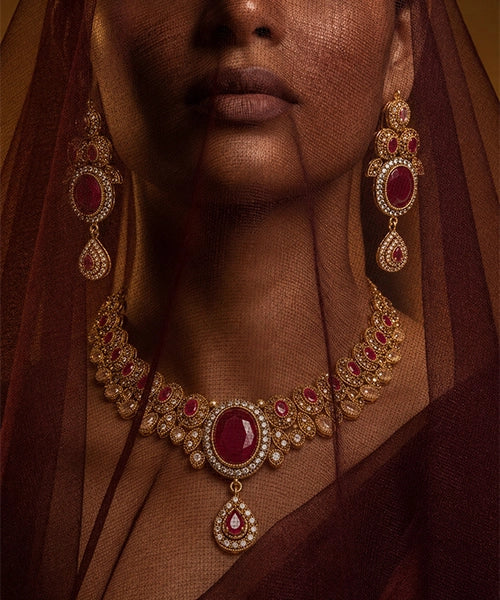
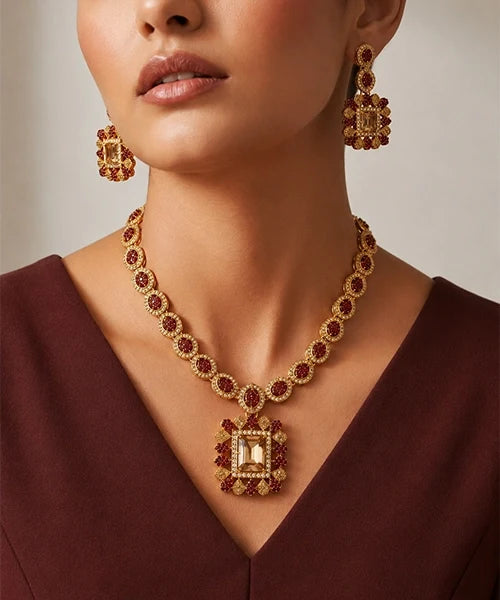
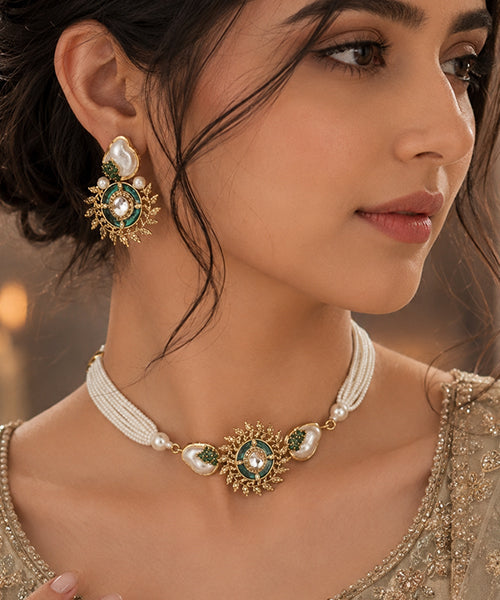
If you're wearing a statement necklace and want to wear traditional earrings, you can, but wear jhumkis instead; they are smaller and balanced with the necklace. If your neck is bare, you can go larger because the eye has nowhere else to go. Making just this much change and being particular can up your styling game.
You might have heard an unsaid rule of not mixing gold and silver but it has changed now. People are now honing mixed metals stacking but with jhumkas, the way to do it successfully is to let one tone clearly lead and use the other as an accent. Gold jhumkas with an oxidised ring and a kurti with jeans is a great combo. But silver rings, a gold necklace and then again silvery jhumkas can clash.
Do Jhumkas Actually Suit Every Face Shape?
Generally yes, with size adjustments. The practical version of this: longer drops elongate the face, wider bell bases add horizontal width. If you want to appear to have a longer face, choose a jhumka with more vertical drop. If you want to soften a longer face, a wider bell that sits close to the lobe without dropping far does this better than a slim elongated piece.
Round faces tend to do well with a longer drop because it draws the eye downward. Oval and heart-shaped faces are the most flexible and can carry almost any size. The face shape charts you'll find online are often too rigid to be useful in real life because they don't account for hair, neckline, or what else you're wearing alongside.
One Thing Worth Knowing About Artificial Jhumkas Specifically
Weight is something most people only think about after wearing jhumkas for a few hours. A pair might look beautiful in the mirror, but by the end of a wedding your ears can tell a different story. That's one reason artificial jhumkas have become so popular. They're usually lighter, so you still get the same traditional look without constantly adjusting them or wanting to take them off halfway through the event.
If you're buying your first pair, don't feel like you need lots of different designs. One simple gold-tone pair and another that's a little dressier will probably cover most occasions anyway.
People Also Ask
Can jhumkas be worn casually every day?
Yes. One pair with a plain kurta and nothing else is one of the most popular everyday looks right now. Keep everything else simple.
How do you stop jhumkas from tangling in your hair?
For someone not used to the feeling of accessories or curly hair, it can be too much to manage. A trick is to pin up the hair that is just beside your ear; this way it won't tangle when you put it on or throughout the day.
What size is best for daily wear?
Around two to three centimetres of drop. Comfortable through a full day, visible enough to notice.
Do jhumkas work on all face shapes?
Yes. Adjust for the effect you want rather than following a rigid chart. Longer drops for a slimmer look, wider bells for softness and width.